

after surgery care services
After-surgery care services: what recovery support can include
How can teams review recovery information over time?
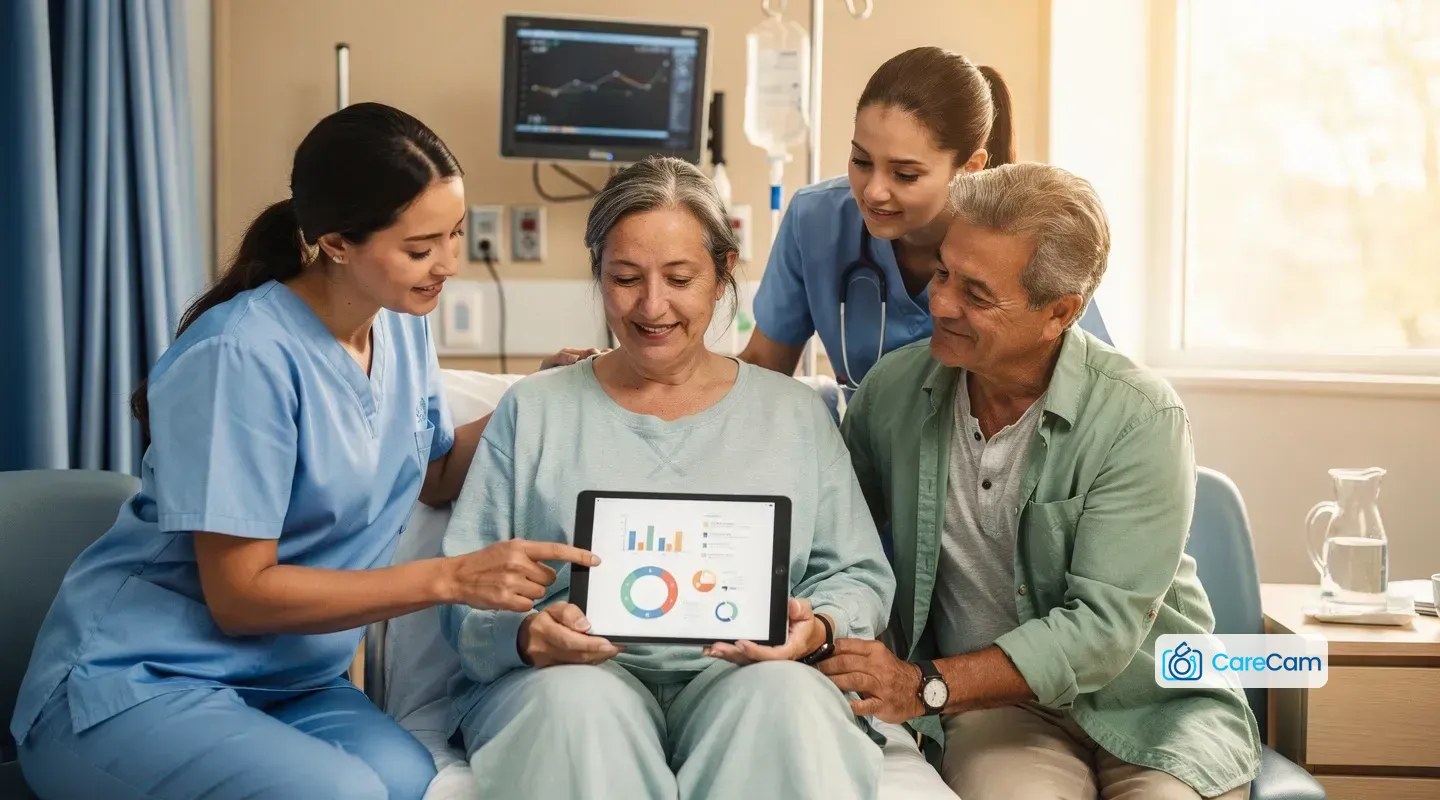
For orthopaedic or spinal recovery, review is clearer when the team defines what each assessment is for. A pre-operative assessment can serve as a reference point for later assessments. During recovery, care teams can compare objective movement measurements with earlier results and review those results alongside their clinical assessment.
Our assessment captures a short video, analyzes it, and presents results for reviewing progress and planning care. We provide longitudinal insights by comparing results from before surgery through each stage of recovery. We support assessment before and after surgery and aid hospital discharge planning. We also support rehabilitation centres with assessments during inpatient recovery and discharge planning.
After discharge, rehabilitation may continue through outpatient or long-term-care hospitals, homes, healthcare centres, or other community settings, depending on the clinical plan. For the handoff, the care team can clarify which result will be reviewed next, who will review it, and how it fits with the next stage of care.
A useful plan usually answers five practical questions:
- What was assessed before surgery, and what will be compared later?
- What support is expected immediately after discharge?
- Which rehabilitation service or professional will coordinate the next stage?
- How will changes in movement, function, or daily activities be reviewed?
- Who should you contact when your circumstances or needs change?
These questions do not create an individual treatment plan. They give you and your caregivers a clear way to discuss the plan with the surgeon, rehabilitation team, hospital, or care provider before surgery.
What should be established before surgery?
A pre-operative assessment can establish the information your clinical team needs before the operation and provide a reference for later reviews. The exact assessment and testing depend on factors such as your age, the operation’s risk, your medical history, expected blood loss, and planned medicines. Your team decides which checks apply to your operation.
Frailty assessment may be included in pre-operative evaluation, using a tool and workflow suited to the clinical setting. A consistent, simple process can make routine frailty assessment easier to include in clinical work, especially when the result is linked to clear actions rather than recorded without a plan.
We offer a baseline assessment before surgery as a reference point for later assessments. That baseline can give a care team an earlier movement measure to consider with later findings; it does not decide whether a procedure or recovery plan is suitable for you.
Evidence about whether pre-operative education improves post-operative pain and function is mixed.
Before surgery, ask:
- Which parts of my health and daily function will you assess?
- Will you record a baseline for movement, strength, balance, or daily activities?
- Which tests are relevant to my operation, and why?
- Could a frailty assessment or fall risk assessment form part of the plan?
- What will happen to the assessment information after discharge?
- Which changes should lead to another review by the care team?
These questions help connect pre-operative assessment with post-operative follow-up without assuming that every person needs the same pathway.
How do care transitions affect recovery support?
Care transitions affect recovery support because your rehabilitation may move from the hospital to an outpatient service, long-term-care hospital, home, healthcare centre, or another community setting. The cited hip-fracture guideline describes these settings as possible parts of rehabilitation after discharge; your own pathway depends on your clinical plan.
For hospitals, we aid discharge planning and support assessment before and after surgery. This means our information may sit within a wider handoff, where qualified professionals interpret it with the rest of your clinical record.
A practical handoff can identify:
- The service or professional responsible for the next review.
- The rehabilitation goals being followed.
- The movement or daily-function measures that may be repeated.
- The support available to you and your caregivers after discharge.
- The route for raising a concern or asking for clarification.
- The point at which the team will review whether the pathway still fits.
Ask for these details in ordinary language. You do not need to choose the assessment method yourself. You need to know how the hospital, rehabilitation service, and care provider will work together after you leave the hospital.
What does rehabilitation work on after discharge?
Rehabilitation after discharge may work on movement, balance, and everyday activities such as walking and self-care. For hip-fracture pathways, the cited guideline describes rehabilitation across acute, recovery, and maintenance phases, with care delivered in hospitals, homes, long-term-care settings, and other community locations. That description should not be treated as a fixed plan for every orthopaedic or spinal operation.
Neurological rehabilitation may consider multiple areas of function rather than movement alone. A selected review reports that trained healthcare professionals may repeat outcome measures at intervals set by the rehabilitation pathway, and that some guidance recommends assessment early in the pathway and before discharge. Recommended intervals vary.
We support rehabilitation centres by guiding care during inpatient recovery and supporting discharge planning. We also track changes in mobility and function across rehabilitation to support timely adjustments to care.
Your rehabilitation discussion can cover four separate areas:
- Movement: How are walking, transfers, range of motion, or other relevant movements being followed?
- Balance: Does the care team need to consider balance as part of your recovery or fall risk assessment?
- Daily activities: Which self-care or household activities matter to your planned return home?
- Function beyond movement: If neurological rehabilitation is relevant, which other areas of function and participation will the team review?
Ask how these areas connect to your goals. A measure is more useful to the conversation when your care team can explain what it represents and how it fits the rehabilitation pathway.
Which assessments may be relevant to discuss?
Different assessments answer different questions, so the relevant choice depends on your operation, health, setting, and clinical plan. Orthopaedic care may focus on movement and function around the operation. A fall risk assessment may combine screening questions with timed tests, and results from those traditional approaches can vary between assessors.
A frailty assessment may help a team organise information about frailty before surgery and identify areas for care planning. Our frailty assessment generates a report that highlights people at higher risk and areas to focus on for care.
Neurological rehabilitation assessments can consider multiple areas of function, rather than movement alone. Guidance reviewed in the selected study also supports use by trained healthcare professionals at intervals set by the rehabilitation pathway.
We support assessment before and after surgery and aid hospital discharge planning. The assessment selected for you should serve the clinical question your team is trying to answer.
Use these prompts when discussing an assessment:
- What question is this assessment meant to answer?
- Is it part of orthopaedic care, neurological rehabilitation, fall risk assessment, frailty assessment, or another process?
- Who will perform it and interpret the result?
- Will the same approach be used for later comparison?
- What action might follow from the result?
- Which parts of the result should be shared with my caregiver or next care team?
These prompts help you distinguish an assessment that informs a care discussion from an assessment that is being treated as a decision on its own.
How should teams review change over time?
Teams should review change over time by linking repeated measures to the rehabilitation pathway and the question being asked. In neurological rehabilitation, the selected review reports that trained healthcare professionals may apply outcome measures at regular intervals, although the intervals vary. Some guidance recommends early assessment and assessment before discharge, with further reviews depending on the guideline and care plan.
We let care teams review objective measurements across assessments to track progress and plan care. We also compare objective measurements with normative ranges and track them over time. These comparisons add information to a clinical review; they do not set a universal timetable for your follow-up.
A consistent review conversation can cover:
- What was measured at the earlier assessment.
- What was measured at the later assessment.
- Whether the same task, method, or context was used.
- What changed in your mobility or function.
- Whether the change fits your goals and wider clinical picture.
- What the team will do with that information.
Ask the team to explain a result in plain language. A number or movement pattern becomes useful only when the responsible professionals can connect it with your examination, symptoms, daily activities, and care plan.
One practical safeguard is to define the comparison question before the next assessment is captured. The question might be whether mobility has changed since the pre-operative baseline, whether a rehabilitation measure should be reviewed again, or whether the result needs to be discussed as part of discharge planning. The care team—not the measurement alone—sets the question and decides what information is relevant.
For each comparison, the team can identify the earlier assessment, the later assessment, the task or movement being considered, and the setting in which each was collected. It can also note whether the same approach and context were used. This matters because a difference between two results may reflect a change in the task, timing, setting, or the person’s ability to take part in the assessment, rather than a simple change in recovery. The result therefore needs explanation from the professionals responsible for the pathway.
This is especially useful when care moves from a hospital to a rehabilitation centre or another service. A receiving team can ask which baseline or earlier result is relevant, what the later assessment was intended to review, and how the findings should sit alongside the wider clinical record. We support hospitals and rehabilitation centres with assessments during recovery and before discharge, but we do not assign the clinical meaning of a result outside the care team’s review.
Where the comparison uses a normative range, the team can also explain what the range contributes and what it does not show about this individual’s pathway. A reference range is context, not a diagnosis or a personal target.
For patients and caregivers, the practical question is not whether every assessment will look the same. Ask what is being compared, why that comparison matters to the current stage of care, and who will explain the result. That keeps objective movement information connected to rehabilitation, patient support, and prescribed follow-up without turning it into a stand-alone decision.
What should patient support include in the plan?
Patient support should give you a clear way to understand the next stage of recovery, prepare questions, and involve the people who will help with the transition. The plan can set out who will explain the rehabilitation goals, how caregivers can take part in discussions, and how follow-up information will be shared between services.
Pre-operative education may help you understand the pathway, but evidence on its effect on post-operative pain and function is mixed. Use education to clarify what your team expects, what each review is for, and which questions you should ask after discharge. Do not treat education as a promise about your recovery.
Care teams can include relevant assessment information in a wider discussion about your support needs and follow-up.
Patient support discussions can include:
- Which daily activities may need support during the next stage?
- What should caregivers understand about the planned follow-up?
- Who will explain rehabilitation goals and progress?
- How will information move if you change from hospital care to community care?
- What should you do if you cannot attend a planned review?
- Which changes in your circumstances should you tell the care team about?
Your surgeon, rehabilitation team, or care provider can answer these questions in the context of your operation. The answers may change as your care setting changes, so keep the handoff information available to the people involved in your support.
How can objective movement monitoring fit into care?
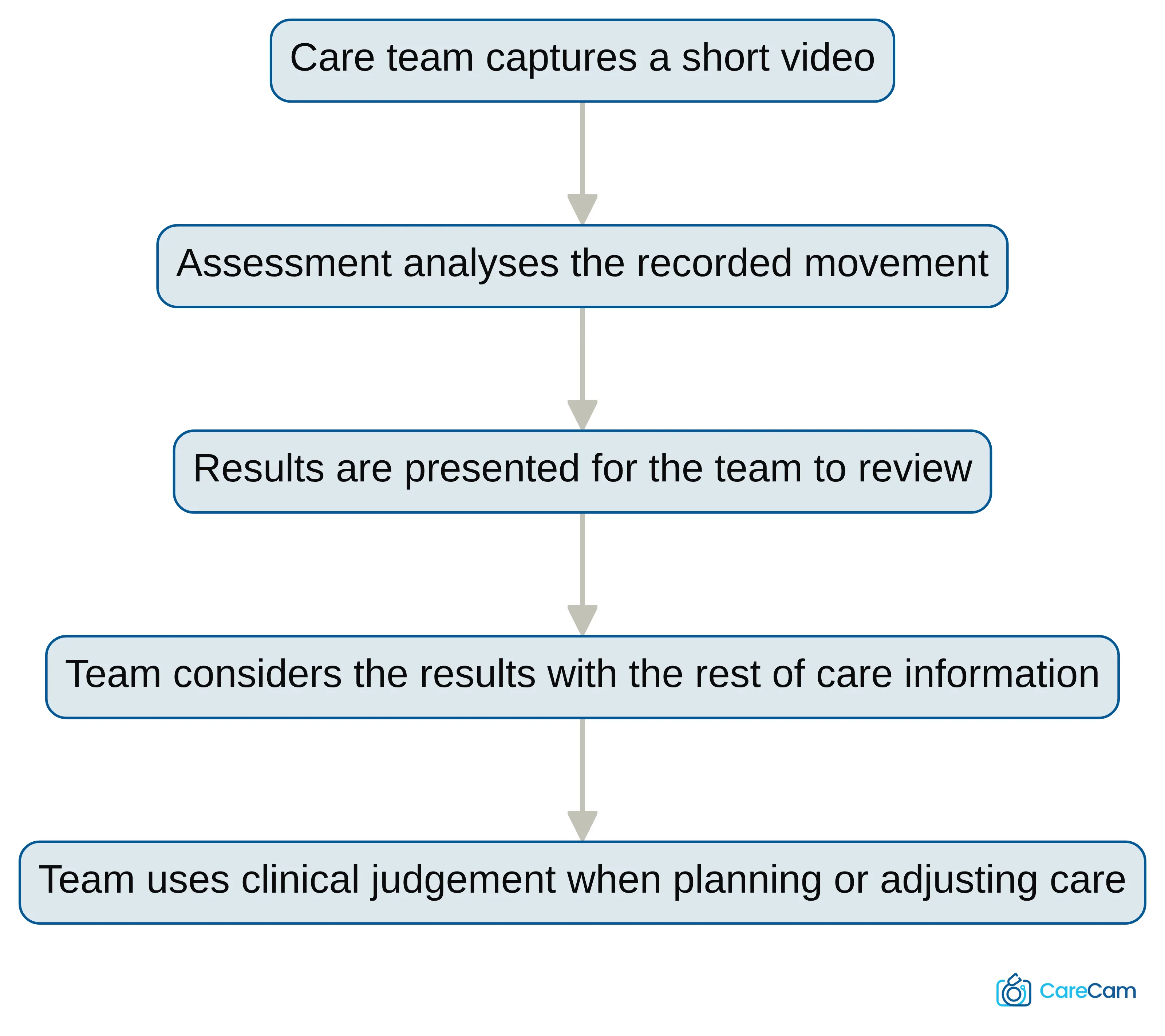
Objective movement monitoring can fit into care as a repeatable information step alongside clinical assessment and rehabilitation. Our assessment captures a short video, analyses it, and presents results for reviewing progress and planning care. We track changes in mobility and function across rehabilitation to support timely adjustments to care.
The basic workflow is straightforward:
- A care team captures a short video for the assessment.
- The assessment analyses the recorded movement.
- Results are presented for the team to review.
- The team considers the results with the rest of your care information.
- The team uses its clinical judgement when planning or adjusting care.
The monitoring step supports review; it does not replace your surgeon, rehabilitation professionals, home-care providers, or prescribed follow-up.
Our 3DGait solution quantifies movement before and after surgery and supports return-to-activity decisions. A return-to-activity decision still belongs within the responsible care team’s assessment of your operation, recovery, and clinical plan.
What can longitudinal comparison show—and what can it not decide?
Longitudinal comparison can show how objective measurements change from before surgery through stages of recovery. We provide longitudinal insights by comparing results from before surgery through each stage of recovery, and we compare objective measurements with normative ranges while tracking them over time.
A baseline can give the team a reference point for later assessments. A later result can then be discussed in relation to that earlier point, the task performed, the rehabilitation stage, and your wider clinical information. The comparison is most useful when the team explains what the measure represents and what decision, if any, it informs.
Longitudinal comparison cannot decide your diagnosis, predict your personal recovery, or determine discharge by itself. A movement result should not be used alone to change treatment, stop follow-up, or make a return-to-activity decision.
Ask your care team:
- What does this change mean in the context of my operation?
- Could factors outside movement affect the result?
- What other information will you consider?
- Does the result change the next discussion, assessment, or rehabilitation goal?
- Who is responsible for making that decision?
What should you ask before agreeing the follow-up pathway?
Before agreeing the follow-up pathway, ask questions that connect the operation, discharge setting, rehabilitation work, and repeated review. We let care teams review objective measurements across assessments to track progress and plan care, while neurological rehabilitation guidance supports repeated assessment by trained healthcare professionals at intervals set by the pathway.
Take this question list to your surgeon, rehabilitation team, or care provider:
- What should my post-operative recovery plan cover after discharge?
- Which service will coordinate my next review?
- Which rehabilitation goals will the team follow?
- Will I have a pre-operative assessment that can be used as a later reference?
- Are fall risk assessment or frailty assessment relevant to my care?
- If neurological rehabilitation is involved, which areas of function will be reviewed?
- How often will the team reassess me, and what determines that timing?
- Will the same movement task or measurement be repeated?
- How will caregivers receive the information they need?
- What should happen if the planned care setting changes?
- Which professional will interpret an objective movement result?
- Which decisions remain with the treating team?
The purpose of these questions is to make the pathway understandable before surgery. You are asking how the parts connect, not selecting a treatment or deciding whether a particular assessment is suitable for you.
Which CareCam assessment options fit the stated care settings?
CareCam assessment options relate to different care questions and settings. We support assessment before and after surgery and aid discharge planning for hospitals. We also support rehabilitation centres during inpatient recovery and discharge planning.
The stated options include:
- Orthopaedic and spinal recovery: We offer a baseline assessment before surgery, compare results through stages of recovery, and let care teams review objective measurements across assessments.
- Neurological gait assessment: Our assessment captures a short video, analyses it, and presents results for reviewing mobility and function across rehabilitation.
- Fall risk assessment: CareCam is used in hospitals and rehabilitation for assessments during recovery and before discharge.
- 3DGait: Our 3DGait solution quantifies movement before and after surgery and supports return-to-activity decisions.
The relevant option depends on the care question, the setting, the staff who will interpret the result, and the clinical pathway. Discuss those conditions with the organisation providing your care.
Our frailty assessment generates a frailty report that highlights people at higher risk and areas to focus on for care. Vis-Frailty is in a clinical study with National Healthcare Group Polyclinics and targets launch in the first quarter of 2027.
Ask which assessment is intended for the care question, who will review the result, and how it will fit with your existing clinical pathway. Do not assume that a named option is appropriate simply because it measures movement or appears in a particular care setting.
What is the safest next step before surgery?
The next step before surgery is to discuss the full follow-up pathway with your surgeon, rehabilitation team, or care provider. Bring the questions from this guide and ask how pre-operative assessment, discharge planning, rehabilitation, patient support, and repeated review will connect in your case.
We support assessment before and after surgery, offer a baseline assessment before surgery as a reference for later assessments, and present results for care teams to review when planning care. Those measures are information within a wider clinical process. A qualified healthcare professional must decide what is suitable for your operation, health, recovery setting, and follow-up needs.
What should caregivers confirm with the care team?
What assessments may be relevant to discuss after surgery?
Different assessments answer different questions based on your operation and health. Relevant assessments may include those focusing on movement and function, fall risk, and frailty. Each assessment should serve a specific clinical question and be interpreted by trained professionals.
How can objective movement monitoring fit into care?
Objective movement monitoring can fit into care as a repeatable step alongside clinical assessments. It involves capturing a short video, analyzing it, and presenting results for review, which helps track progress and plan care.
What should patient support include in the recovery plan?
Patient support should clarify the next stage of recovery, involve caregivers, and set expectations for follow-up. Discussions should cover daily activities needing support, rehabilitation goals, and how information will be shared between services.
How should teams review change over time in recovery?
Teams should review change over time by linking repeated measures to the rehabilitation pathway. This involves comparing earlier and later assessments to track progress and inform care decisions.
What can longitudinal comparison show in recovery monitoring?
Longitudinal comparison can show how objective measurements change from before surgery through recovery stages. It provides insights but cannot decide diagnoses or predict individual recovery outcomes.
What should you ask before agreeing to the follow-up pathway?
Before agreeing to the follow-up pathway, ask about the post-operative recovery plan, the coordinating service for your next review, rehabilitation goals, and how often reassessments will occur.
Next step
Have a question for CareCam?
Technical and clinical questions go to the team who built 3DGait and Vis-Frailty.
Get in touch